

What Does Recruit Mean? A Clear Guide for Job Seekers and Employers
Recruitment is a term that is widely used in the job market, but many people still feel unsure about what it actually means. Job seekers, fresh graduates, and even employers often come across words like recruit, recruiting, or RPO and struggle to understand how these ideas are connected. This confusion usually happens because recruitment is more than just hiring—it involves a complete process. In this guide, we clearly explain what does recruit mean, how the recruiting process works in real situations, and how RPO plays a role in supporting modern hiring, all in simple and easy-to-understand words.
At its core, recruiting focuses on finding the right person for the right job. When a company recruits someone, it carefully evaluates whether the candidate’s skills, experience, and attitude match the role’s requirements. Recruitment is not just about filling vacant positions quickly. Instead, it is about making thoughtful hiring decisions that help build strong teams and support long-term business growth. Effective recruiting ensures that both employers and employees benefit from a better fit and more successful working relationships.
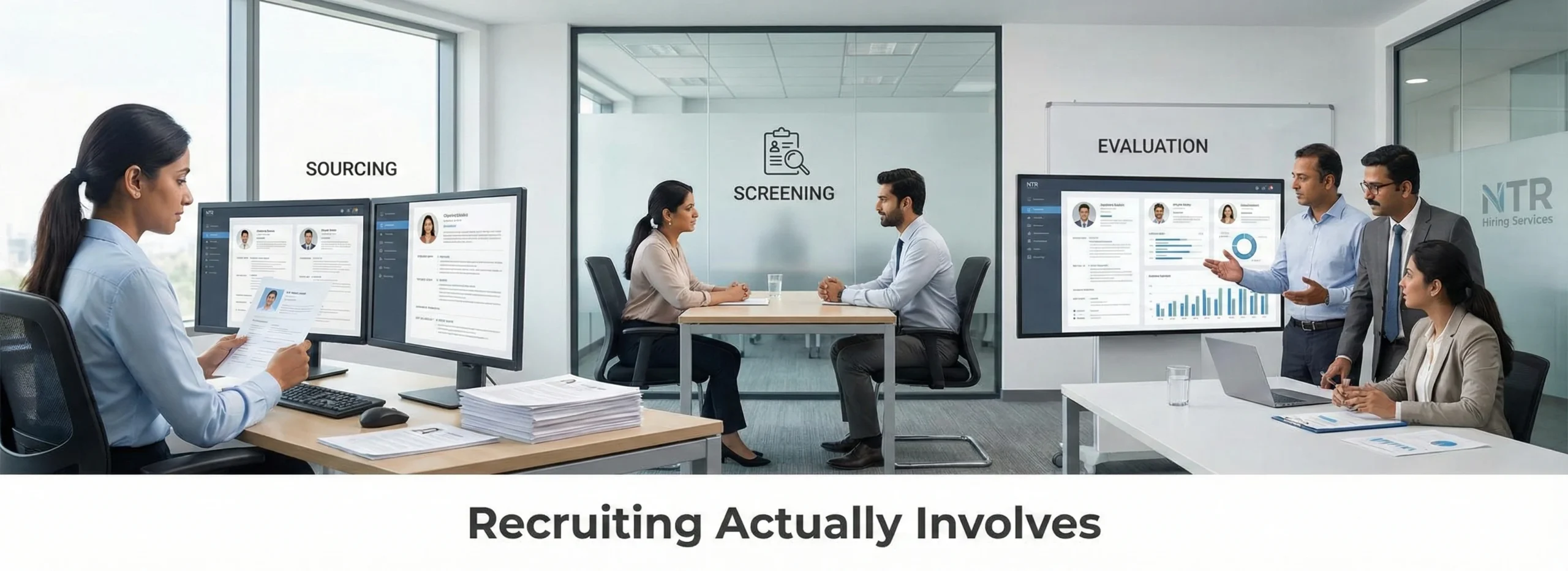
What Recruiting Actually Involves
Recruiting is a practical process that focuses on turning hiring requirements into real placements. Once a role is clearly defined, recruiters actively look for suitable candidates using different channels such as job portals, employee referrals, professional networks, and recruitment agencies. The goal at this stage is not just to collect applications, but to identify profiles that closely match the role’s expectations.
In everyday practice, recruiting involves carefully reviewing resumes, shortlisting relevant candidates, and coordinating interviews to assess skills and suitability. Recruiters also act as a bridge between employers and candidates by sharing role details, clarifying expectations, and maintaining communication throughout the process. For those trying to understand what recruiting actually involves, it is best seen as a step-by-step effort to connect qualified talent with open roles in an organized and efficient way.
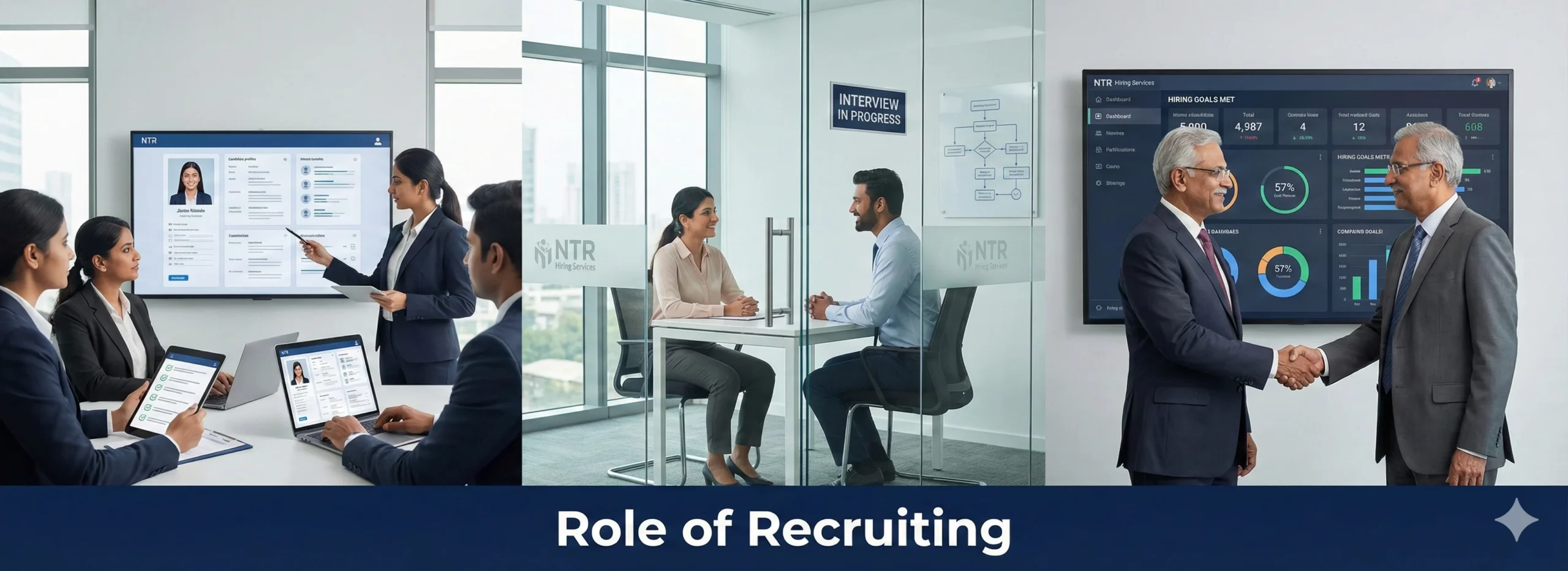
The Role of Recruiting in the Hiring Process
Many people who are new to hiring or job searching often ask what do recruiting mean, especially when they start interacting with companies, recruiters, or job portals. In simple words, recruiting means the complete effort a company makes to find, connect with, and choose suitable people for open job roles. It does not begin or end with just posting a job vacancy. Recruiting starts when a company decides it needs new talent and continues until the right person is selected and ready to join. When people ask what do recruiting mean, they are usually trying to understand how decisions are made behind the scenes. Recruiting includes activities like reaching out to potential candidates, understanding their background, explaining job expectations, and checking whether their skills match the role. It also involves communication, follow-ups, and coordination so that both the employer and the candidate stay informed at every stage. For employers, recruiting helps ensure that time and resources are used wisely by focusing on candidates who truly fit the role. For job seekers, understanding what do recruiting mean makes the process less confusing and more transparent, helping them prepare better and respond confidently during interactions. Overall, recruiting creates a structured way for companies and candidates to connect, evaluate opportunities, and move forward with clarity and purpose.

What Does RPO Stand for in Recruiting?
As companies expand and hiring volumes increase, many organizations begin to explore more efficient ways to manage recruitment. At this stage, people often try to understand what does recruiting mean in a large-scale or business-focused environment. This curiosity naturally leads to another important question: what does RPO stand for in recruiting? RPO stands for Recruitment Process Outsourcing, which is a hiring model designed to support companies with their recruitment needs in a structured and scalable way.
In the context of recruiting, RPO refers to a partnership where a company works with an external recruitment provider to handle part or all of its hiring activities. Instead of depending only on an internal HR team, organizations use RPO services to manage sourcing, screening, and coordination more efficiently. Understanding what does recruiting mean at this level helps employers see recruiting as a long-term process rather than a short-term task. RPO providers align closely with a company’s hiring goals, quality standards, and timelines, ensuring consistency across all recruitment efforts. This approach allows businesses to improve hiring speed, reduce operational pressure, and access specialized recruitment expertise, while still maintaining control over their overall hiring strategy.

What Is a RPO in Recruitment?
To understand how modern hiring works at scale, it is important to first clarify what does rpo stand for in recruiting. RPO stands for Recruitment Process Outsourcing, which refers to a hiring approach where companies partner with an external recruitment team to manage their recruitment needs more efficiently. Once employers understand what does rpo stand for in recruiting, the next natural step is learning how this model works in real-life hiring situations. In simple terms, an RPO is a long-term recruitment partnership where an external team works closely with an organization to support ongoing hiring requirements rather than handling recruitment on a one-time basis.
In practical use, an RPO provider takes responsibility for several recruitment activities such as sourcing candidates, screening resumes, coordinating interviews, and supporting employer branding efforts. By understanding what does rpo stand for in recruiting, companies begin to see recruitment as a structured process instead of a reactive task. This model helps organizations manage high-volume or continuous hiring needs while maintaining quality and consistency. Job seekers also benefit from RPO-led recruitment because it often brings clearer communication, organized hiring steps, and better alignment between job roles and candidate expectations. Overall, RPO helps both employers and candidates experience a more streamlined and professional hiring process.

Why Understanding Recruiting Matters
Understanding modern recruitment models is important for both job seekers and employers, especially when learning what is a RPO and why it is widely used today. For job seekers, knowing what is a RPO helps them understand how large companies manage hiring in a more organized way. It explains why communication may come from an external recruitment team and how structured hiring steps are followed. This clarity allows candidates to prepare better, respond confidently, and make informed career decisions without confusion about the hiring process.
For employers, understanding what is a RPO provides insight into how recruitment can be handled more strategically. Instead of treating hiring as a routine task, organizations can use RPO models to improve planning, reduce hiring delays, and build stronger teams. In today’s competitive job market, recruiting is no longer limited to posting jobs and conducting interviews. It has become a business-driven function that directly impacts productivity, growth, and long-term success. By clearly understanding what is a RPO, along with how recruiting works at different levels, companies and candidates alike can make smarter, more confident decisions that support sustainable career and business outcomes.

Conclusion
Understanding what does recruit mean helps both job seekers and employers better understand the hiring process with confidence. Recruiting is not just about filling positions; it is about finding the right talent and building strong teams. With the support of structured recruiting practices and models like RPO, organizations can hire more effectively while job seekers benefit from clearer and more transparent hiring experiences. Having a clear understanding of these concepts makes recruitment decisions smarter and more informed.
Recruitment Agency
Serving Delhi NCR
We provide reliable recruitment solutions to help companies find suitable candidates across different roles and industries. Our process is simple, clear, and focused on your hiring needs. Fill out the form to discuss your hiring requirements with our team.
15–30 Minutes
Average response time
100%
Hiring process compliance
97%
Long-term client retention
Explore Our Recruitment Services Across Delhi NCR
Any Questions?
Have questions about recruitment and hiring? Explore these FAQs to understand what recruiting means, how the hiring process works, and how RPO supports better hiring decisions for employers and job seekers.
For job seekers, recruiting means how companies review applications and decide who to hire. Understanding this helps candidates prepare better for interviews and job discussions.
An RPO helps employers by managing tasks like finding candidates, screening resumes, and coordinating interviews. This saves time and improves hiring quality.
Recruiting is important because it helps employers hire the right people. Good recruiting reduces employee turnover and builds strong teams.
When job seekers understand recruiting, they know how hiring decisions are made. This helps them prepare better, choose the right jobs, and grow their careers.
A RPO in recruitment is a long-term hiring partnership. An external recruitment team helps a company with regular hiring needs instead of hiring people one by one.
Subscribe for latest news & updates
Stay updated with our latest news, career tips, job opportunities, and exclusive updates.

Get in Touch
Quick Links
© 2025 NTR Hiring website Made By NTR Capital Group